New user but experienced to training: Endurance Training

I’ve been cycling since 2022 and ride circa 5k Miles a year. Previously had a training coach via Training Peaks. Attracted to Xert for AI training programmes.

A) What type of rider should I choose as I train for endurance? GC? None available appear ideal.

B) The initial trading programme created by Xert set very few sessions and those it did set don’t appear to be similar to the ones a professional trainer for my Endurance goal (mix of Zone 2 plus Zone 4 or 5 Intervals and different cadence targets (e.g., slow to build strength.)

C) I set available times for trading but some sessions AI set were dates outside those I said I could do.

The reason Athlete Type (Focus Duration) ranges from Road Sprinter (2 min power) to Sprint TT (20 min power) is you need some higher power stimulus to train effectively.
If 1-3 hour power were an option you’d be telling the system to train by riding endurance level exclusively where your power curve starts to flatline. That works to raise TP over time especially with unrestricted hours to train, but is not an efficient or effective way to train long term.
You want to address your low and high/peak systems in proportion applicable to your goals which you should vary from time to time.

What type of events or goals do you have in mind?
What are your program settings and target end date?

There are a number of posts here that discuss cadence drills. Xert doesn’t push them but you can practice cadence drills on appropriate workouts if you like. The coach community is split on their true value. Otherwise your preferred natural cadence is the way to go. That likely rises for those new to cycling who may start in 60-70rpm range and find themselves 90+ a few years later. You may also be a grinder versus spinner.

You may find my onboarding tips post of interest although some content is outdated –
Onboarding steps for Xert trial users and newbies - General - Xert Community Forum

1 Like

I don’t agree that it’s not an effective or efficient way to train. Just about every pro I follow on Strava that shares power data does a ton of endurance riding, some longer intervals, and then microintervals in the final build before racing.

There’s a lot I like about Xert, particularly modeling and training XLSS/XHSS/XPSS separately, but I think if I followed it year-round it wouldn’t prepare me properly for the 4-6 hours XCM races that I’m focused on.

Xert does not replace a real trainer. It is a paint brush, not an artist. It is a potent tool for the (self-) coached athlete. It wont make decisions for you, it will only give you advices based on the input you gave it (Watts while cycling and decicions you gave the program). The workouts are a lot more shorter harder intervals mostly for the reason that they give more xss by being less fatiguing
A) if you dont know, 5 min-power seems pretty allround.
B) you can do whatever you want, but Magic Buckets shows you a way to get your buckets filled as efficiently as possible. Use the workout generator if you want.
C) flex vs. fixed? you can as well change one monday or every monday..

1 Like

I’ve been doing event target training for metric century rides this year. I also wanted to focus on climbing, so I chose “climber” as my athlete type. I’ve set the event types as “mountainous recreational gran fondo” based on the events, my goals, and my fitness levels. On Xert’s training calendar, the weekly focus and individual workouts typically target “climber” and “GC”, and occasionally extend further in either direction and hit “puncheur”/”rouleur” and “TT”.

My take is that for endurance rides you want to focus on Lower Threshold Power and TP, with less of an emphasis on Peak Power, so matching a longer target power athlete type like climber / GC makes sense.

As long as I already have a base, Xert tends to recommend me roughly 1 longer Z2 ride, and 2 high intensity interval rides each week. Earlier in the season, it was 2 longer Z2 and 1 HI interval rides. It’s probably going to depend on a lot of variables you have set within the system: What does your historic data look like (if you have imported any)? What training plan and training goals have you set? What is your training level according to Xert? What is your event readiness # if you have an event program set? There are a variety of ways you can set up your training program goals, and Xert will tailor it’s recommendations based on whatever those goals are.

RE: cadence - Xert doesn’t do low cadence work, but I’ve experimented with and had previous discussion about using different cadences during Xert workouts. Xert seems to recommend a cadence based on some average of your natural riding cadence collected during workouts. My natural cadence is around low to mid 90’s, and that’s what Xert would recommend as a baseline target cadence with HIE intervals going up to 110+. I wanted to work lower cadences for climbing, so I just started riding my own lower target cadence during workouts. Now Xert recommends a lower base target cadence range, and subsequently lower HIE range. If you want to work low cadence, just pick a low cadence target and stick to it during a workout. If you need to reduce ERG power to compensate for lower cadence, you can reduce the trainer power control % in the Xert EBC app for trainer workouts.

Overall it’s been working well for me, even though I feel like I’m not utilizing 100% of Xert’s potential, and will be experimenting with adjusting training program sliders and numbers more, now that I’ve been using it for a while.

HTH

2 Likes

Sorry, I was waiting until there were a few replies to my post. Thank you, yes I understand training methodology (I did a Sports Science Degree, albeit in the early ‘80’s.) I agree there should be a mix of, shall we say, Zone 2 and Zone 4 or 5 sessions. Hence my question which type of rider should I select on the basis this then delivers training sessions to suit. Interesting point re Low Cadence sessions (which I found to be very productive.)

I tend to do between 50 and 100 mile [Road] Sportives as I have no desire to race. My FTP is 180 which is 2.2 Watts/Kilo. Overall objective is to keep fit and enjoy longer Sportives better, not to beat PBs perse.

I’m inclined to agree, Xert didn’t set sessions I expected. I imagined the cause was because I’d not selected the type of rider I was (i.e., to train for endurance I need to do a lot of endurance Zone 2 shall we say, but also a reasonable number of ‘efforts’ to build my High Aerobic threshold.

I think many, like me, want to train as an Endurance rider. It would be helpful if Xert included that as a Rider Type. That would, I would think, help the AI side select appropriate sessions in aid of that goal (rather than us trying to fit one of the existing Rider Types to our goals, or at least say “if you want to train for endurance events chose either GC or Climber?)

I imported over two years of Zwift and real road sessions (plus I know what my FTP is, 180, but my Low Aerobic Capacity if 602 on Garmin while my High Aerobic Capacity is, currently, 207 and my Anaerobic Capacity is 82.) These are a result of continuing to follow the sessions I’d been set from when I has a Fitness Coach on TP (which I still use.)

It sounds like you have enough data in the system such that your fitness signature should be fairly accurate and stable. That means the workouts generated by Xert shouldn’t end up too easy or too difficult, so you should be able to jump right in without needing any difficulty adjustment time period or trying to force a breakthrough to reset your fitness signature.

Xert is definitely not the easiest platform to understand, and while there is a lot of documentation there are also unintuitive UI elements and lots of settings to wrap your head around. I agree it seems a bit lacking if you look at it from an endurance event perspective. The athlete type seems like it doesn’t match up to endurance activities, but don’t over think it too much. What the athlete types really control in Xert is the power magnitude + time that your interval training focuses on. But this focus is only when you are putting out power at or above your threshold power. Shorter power duration focus / athlete type = shorter more intense intervals; longer duration focus / athlete type = longer and slightly less intense intervals. For the majority of endurance activities you are operating under your threshold power, and using aerobic conditioning and high intensity intervals to raise that threshold.

So any workouts that raise your threshold power will be beneficial toward your endurance goal, regardless of athlete type focus, but won’t necessarily hit your long ride endurance goal. I saw mentioned in another forum post that Xert automatically adjusts and recommends low intensity/energy / Z2 rides or workouts of a duration that you typically ride them at. So if you consistently do a 4 hour rides, it will recommend XSS that requires 4 hours to complete for a lower threshold workout. I don’t know exactly how this works or how truthful it is, but I will give you an example from my personal experience later.

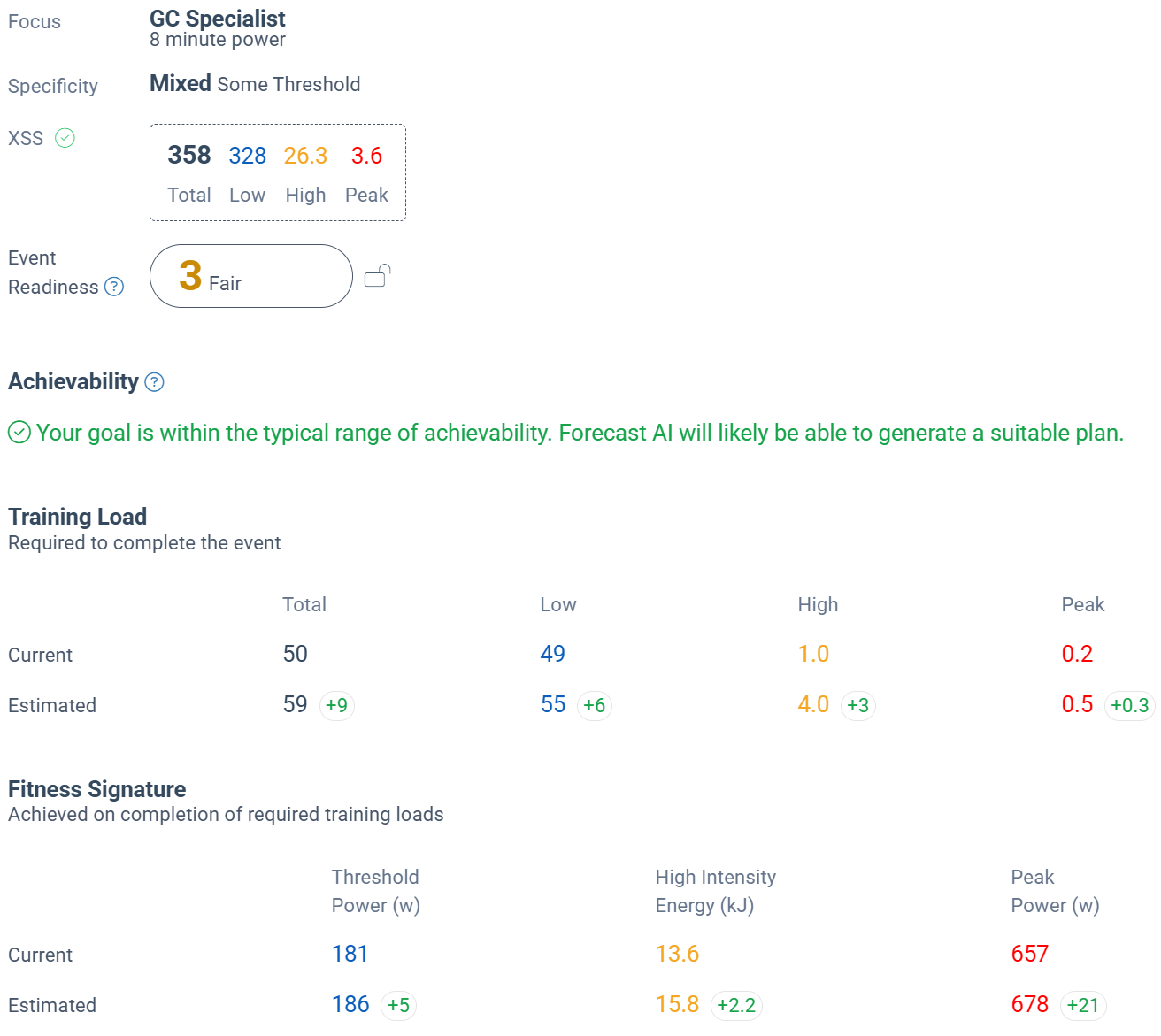
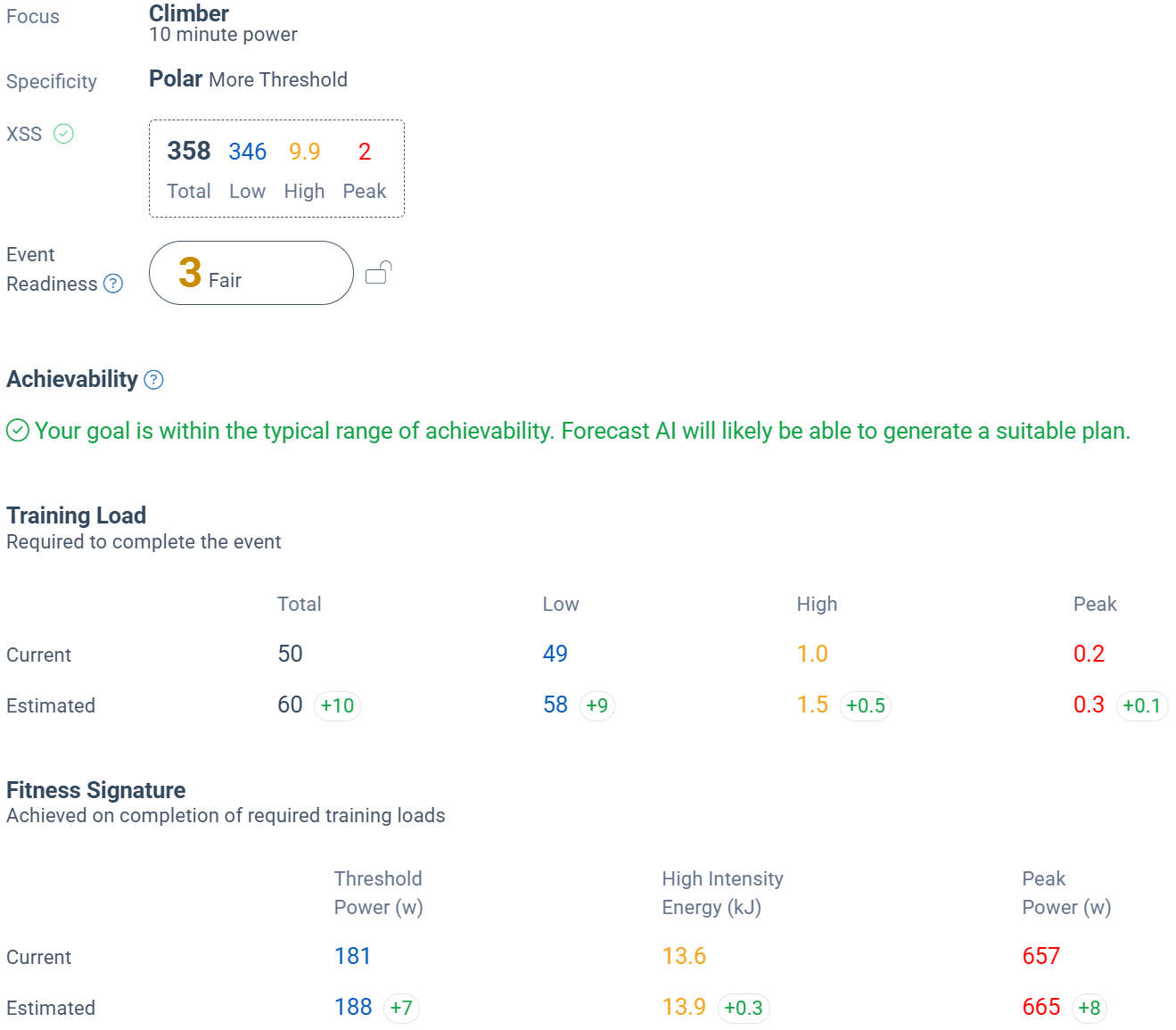
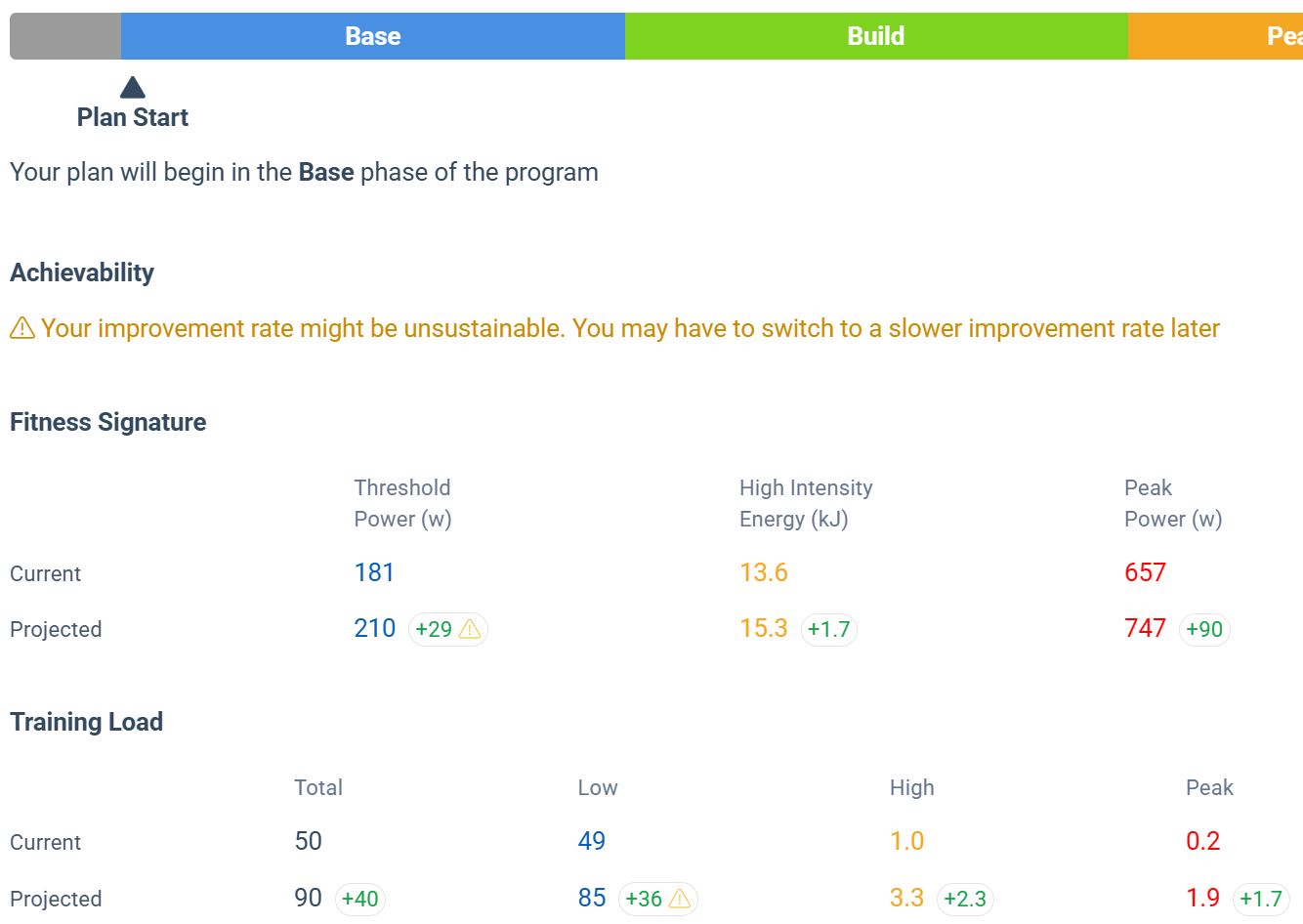
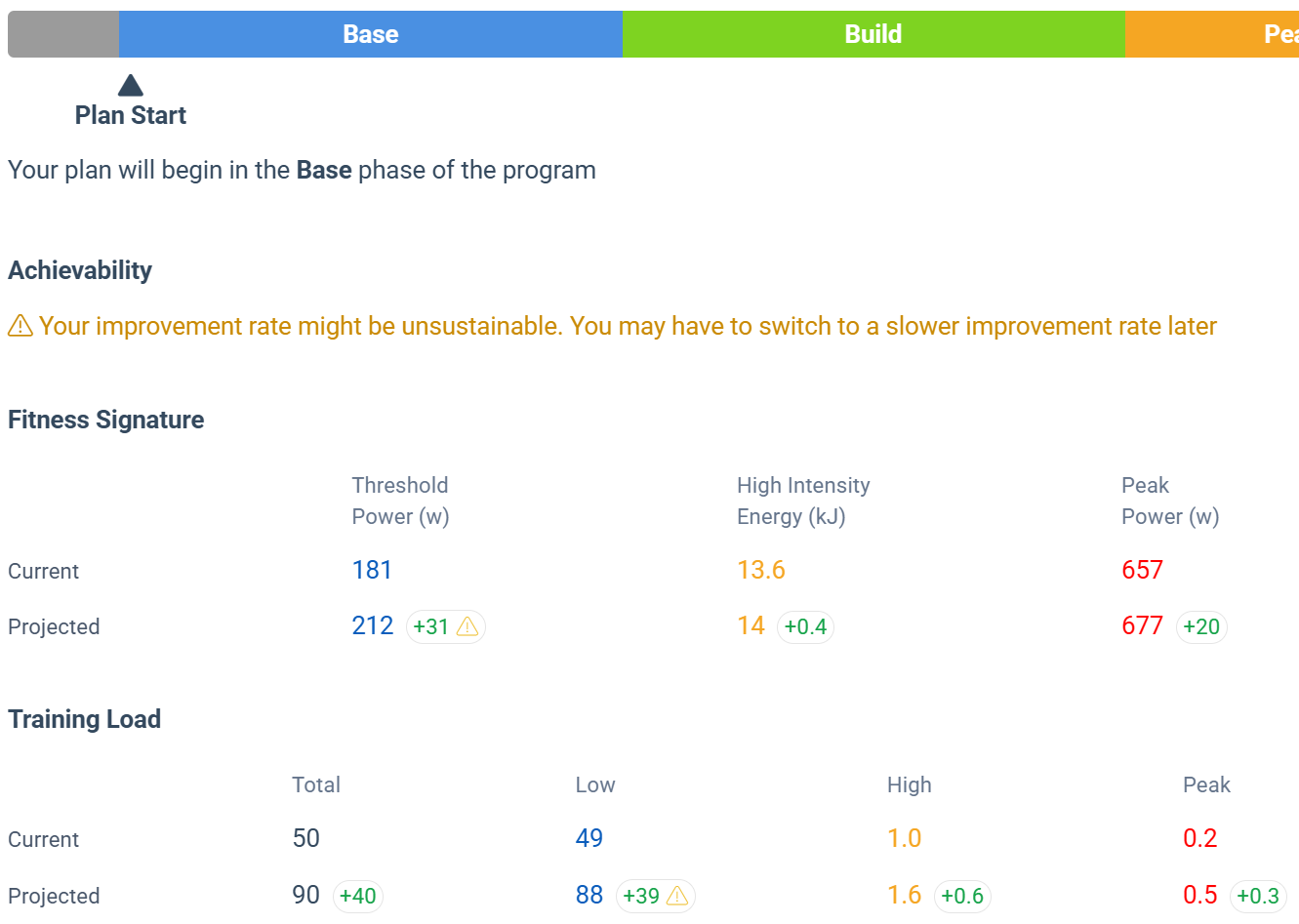
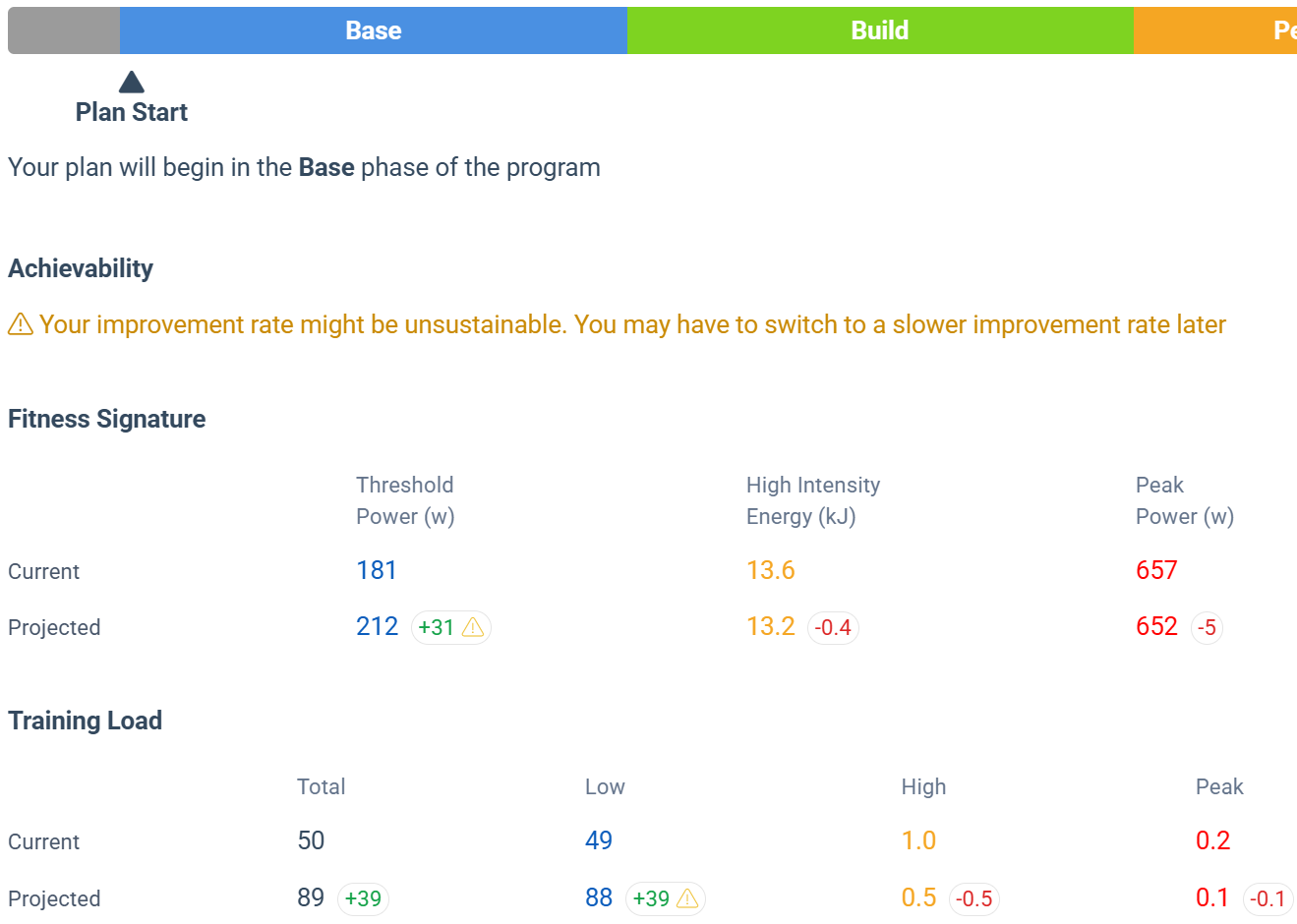
Coming from a similar training goals perspective, my personal recommendation is to set your athlete type to one of GC (8 min), Climber (10 min), or TT (20 min). But I don’t think it really matters that much which one you choose, if the training program you choose matches the actual rides that are your goals. I’m putting some example screenshots below that show how Xert changes the athlete type / focus and power goals based on using the event training program with several different criteria.

You may want to refer to the table in this page documenting the “event readiness” metric:

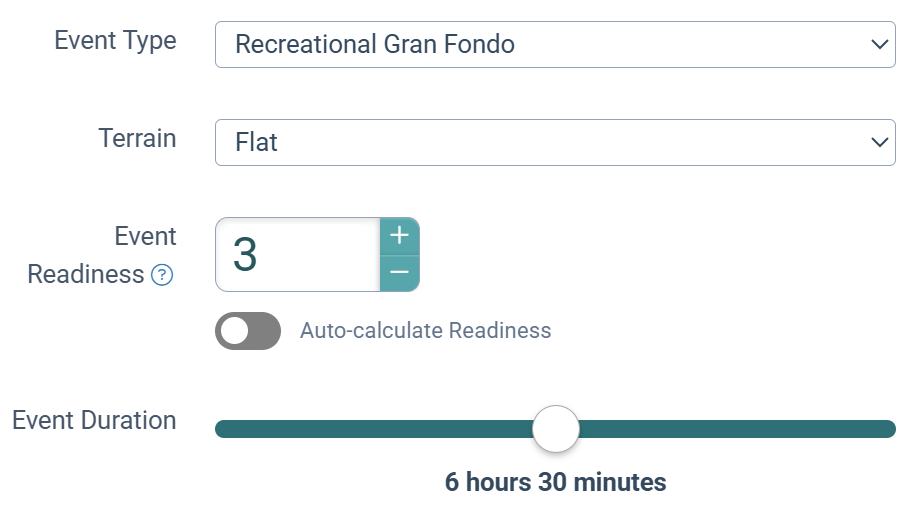
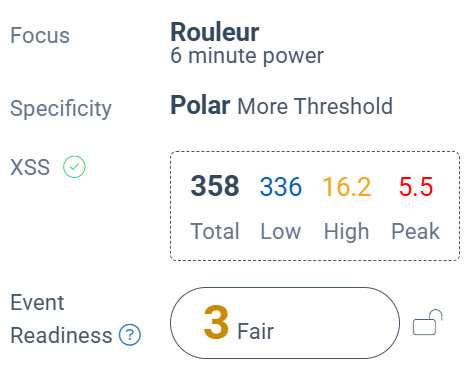
Here’s an event goal for a flat, 6+ hour, recreational gran fondo, w/ readiness = 3

You can see the focus is “rouleur (6 min power)”, and note the XSS numbers.

The training load and fitness signature requirements:

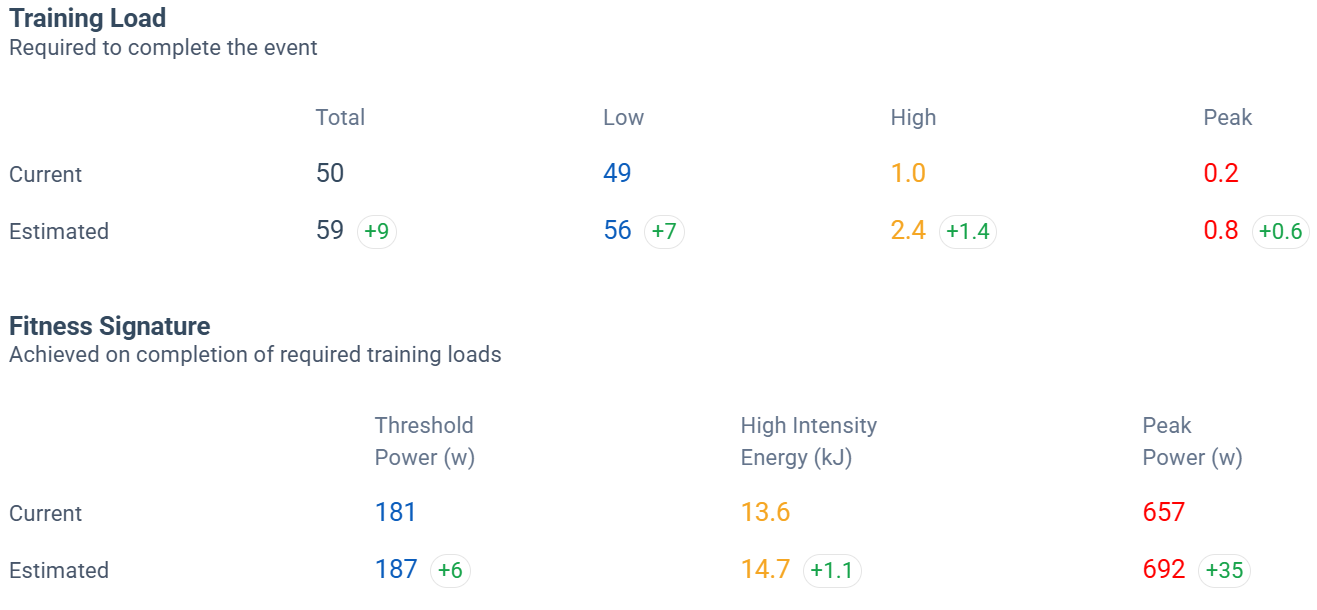
Here’s the same event 2 more times, but changed from flat, to hilly, to mountainous terrain. Notice the focus has changing from Rouleur, to GC, to Climber, in addition to the XSS, TL, and power/energy numbers changing.

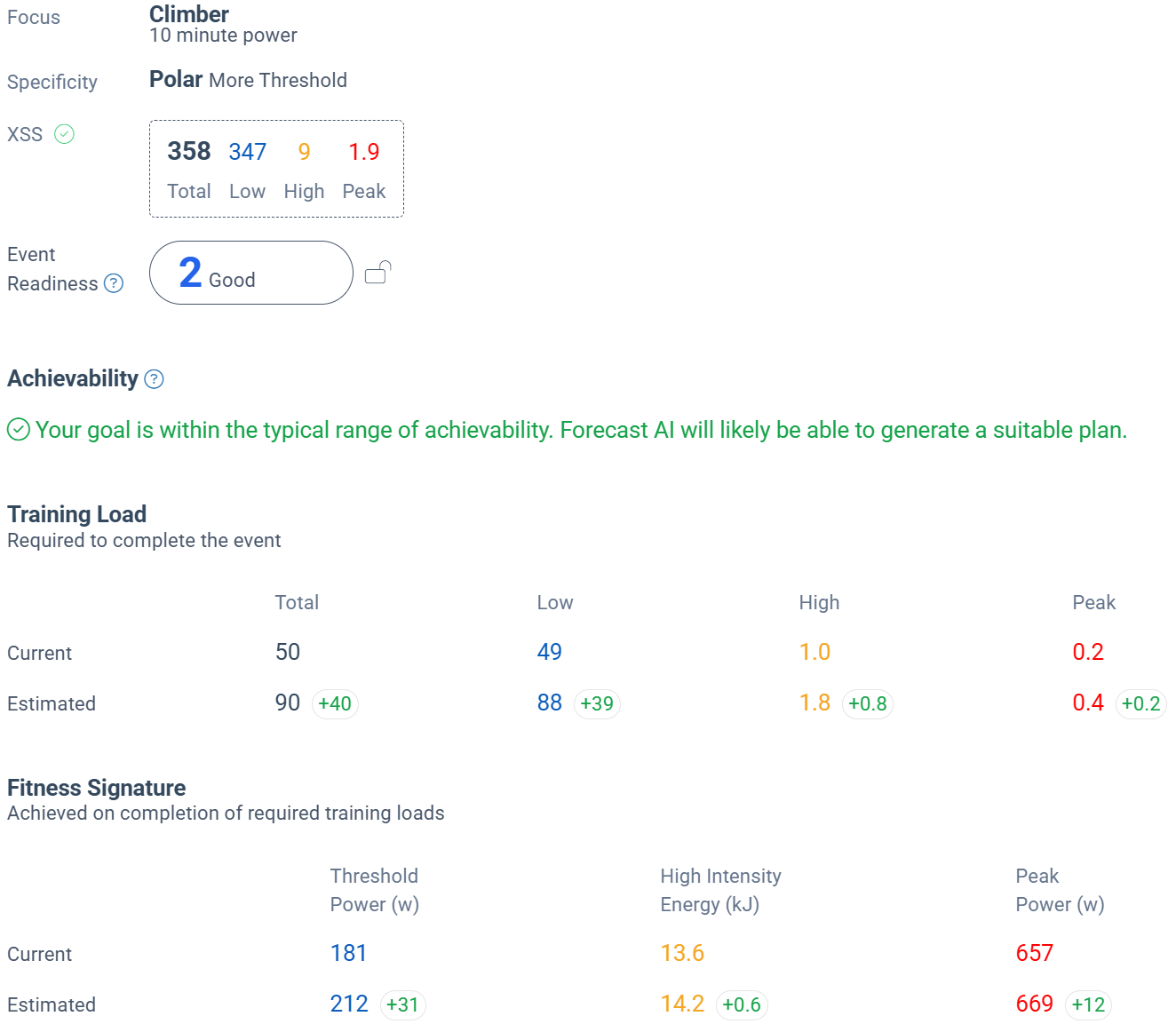
And here’s the event again with the mountainous terrain type, but with readiness set to 2 instead of 3.

All of this is to say that I think the athlete type is more about when you need to put down power above your threshold, how long do you need to sustain it for. But for doing recreational endurance riding, you don’t really want to or need to put down extra power unless you’re climbing, and based on the event program examples above you can see the athlete type / focus changes primarily based on the terrain. In all cases, the other training numbers all scale with the activity, but remain more focused on the lower energy / power.

Back to my personal example, when I first started using the event target program at the beginning of the season, it had me starting out at 2 hour aerobic rides. By the end of the season with my fitness getting better and my rides getting longer and more difficult, it was giving me just under 300 XSS low TL for a weekly long aerobic ride which would take me 4+ hours to complete outdoors (or 3.5+ hours estimated indoors if I could bear it).

So I recommend giving the event training program a try if you haven’t already. The other programs you could try that I think fit well with endurance are Base-Build-Peak with the focus set to a longer duration (10+ min power), or the Race program where you aim to improve upon a past performance you’ve uploaded.

OK, so to cram even more screenshots into this post, here’s the base-build-peak program at 3 different power duration settings. Note that the threshold power and low TL do change a small amount between the programs, that the high and peak energy/power have very large differences.

Road sprinter (2 min power):

Rouleur (6 min power):

TT (20 min power):

Hopefully I haven’t rambled too much and been decently coherent. And hope this help at least a bit toward getting Xert to match your goals.
2 Likes

Brent, thank you. Very comprehensive. I shall take my time and work through your note and let you know if I have any further comments. Many thanks.