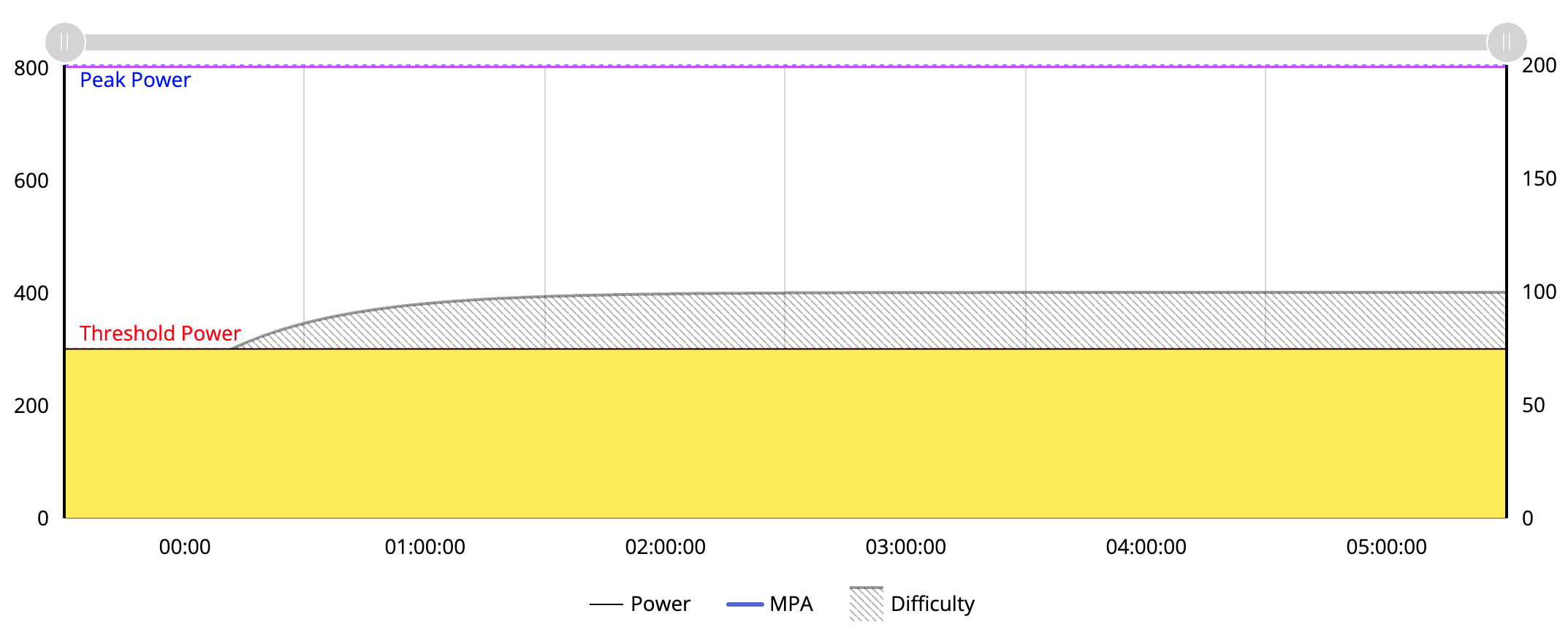
I think what you mean to say is that all power values below TP contribute only to XLSS. As @hpbieker points out, they don’t all contribute the same amount. Intensities closer to TP contribute more.
One could make an argument that intensities below TP should be partially assigned to XHSS. In fact, this is something we are exploring and currently evaluating for Xert 2.0 that’s in development. Here’s an example of how the differences are seen:
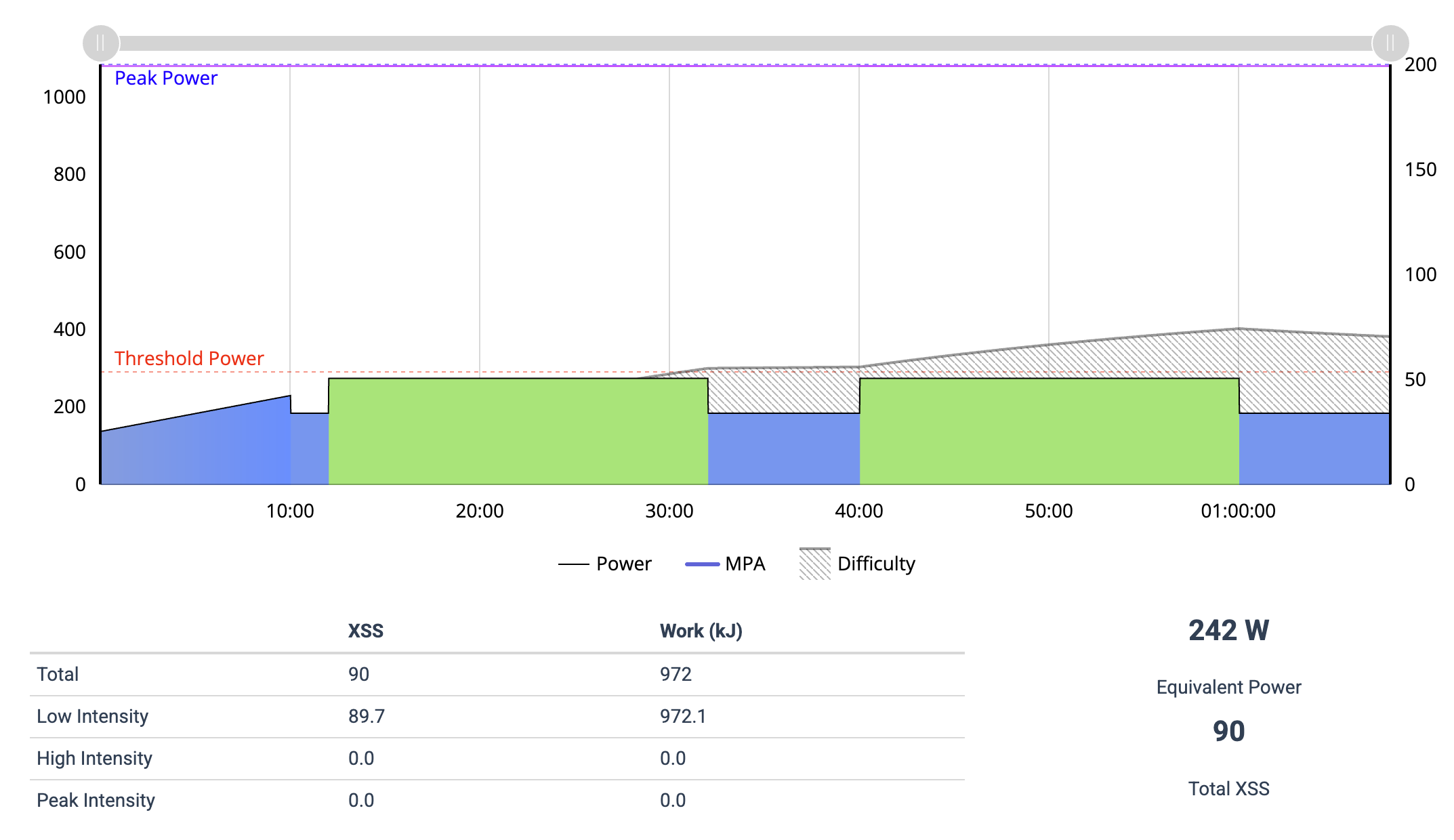
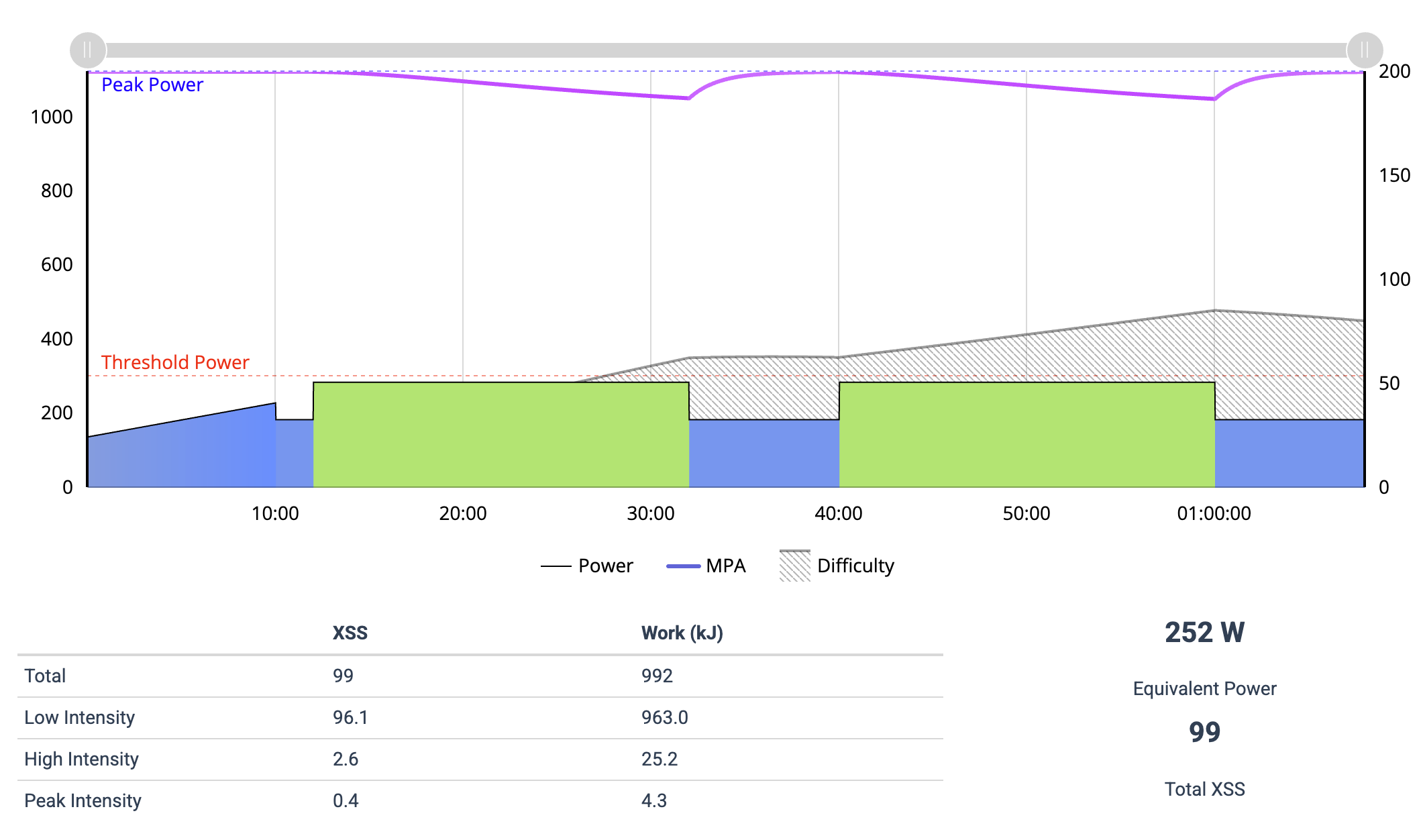
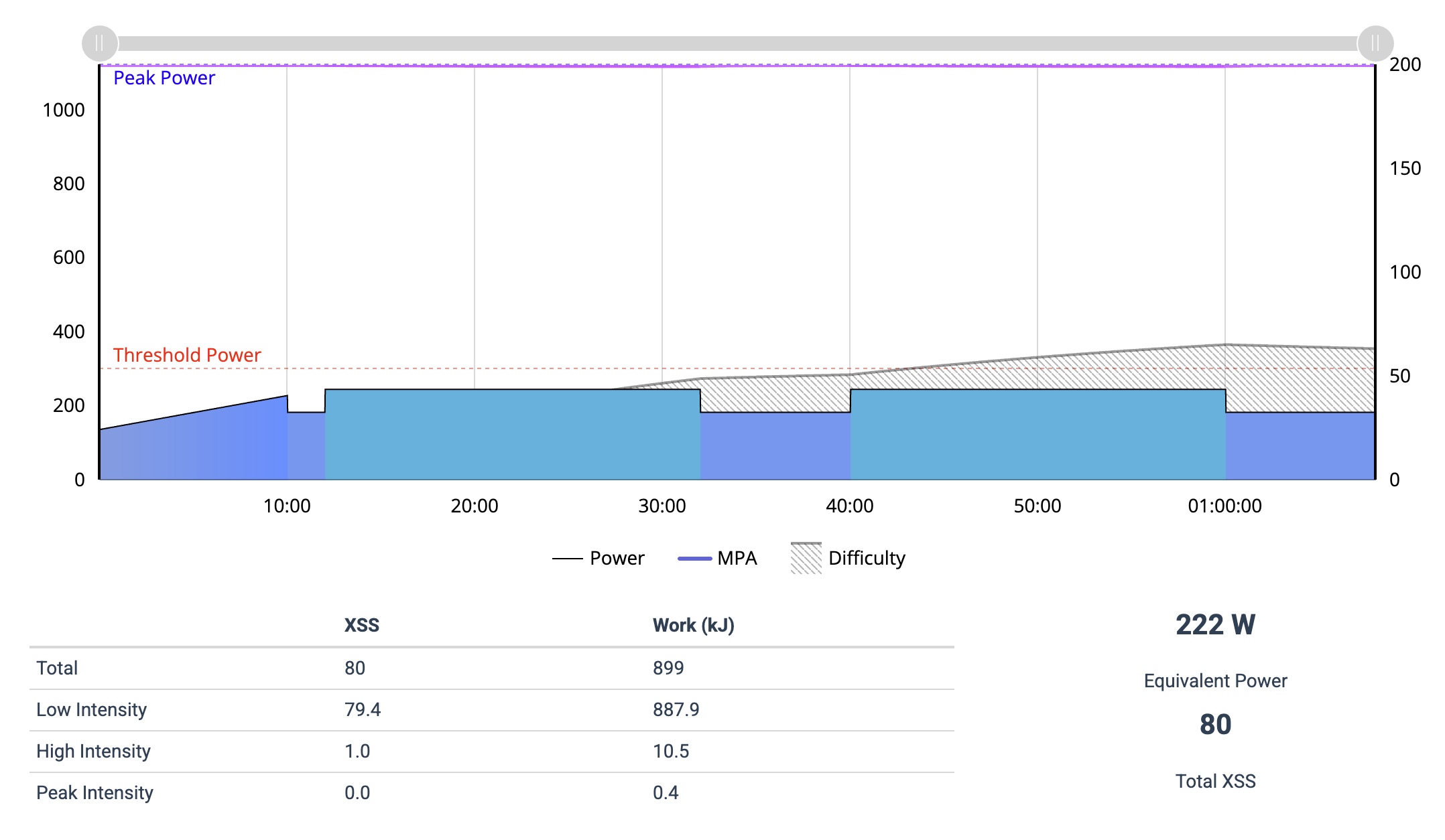
Let’s evaluate a 2x20 sweet spot workout at 95% of TP. This is upper-upper range for “sweet spot” but makes a good comparison:
What you’ll notice first most likely is that MPA comes down at 95% of TP in 2.0. That’s new and we think this will improve the MPA model overall. This drop in MPA is due to XHSS being accumulated below TP. Note the differences in XHSS (and XPSS too) between the two workouts. You’ll also notice the differences in XEP and Total XSS. You can also visually gauge the difference in difficulty scores. 2.0 will better reflect the recovery demands since it will make your training status more likely to be yellow after doing this workout.
This you could say is a material difference between 1.0 and 2.0. However, this workout is atypical and unless you plan on doing this type of workout as your main go-to workout during a plan, the accumulation of differences between 1.0 and 2.0 are not likely to manifest into anything materially different. If you were to spend all of your time doing this type of workout for all of your training, you would likely adjust recovery demands to ensure you get proper recovery in the current system.
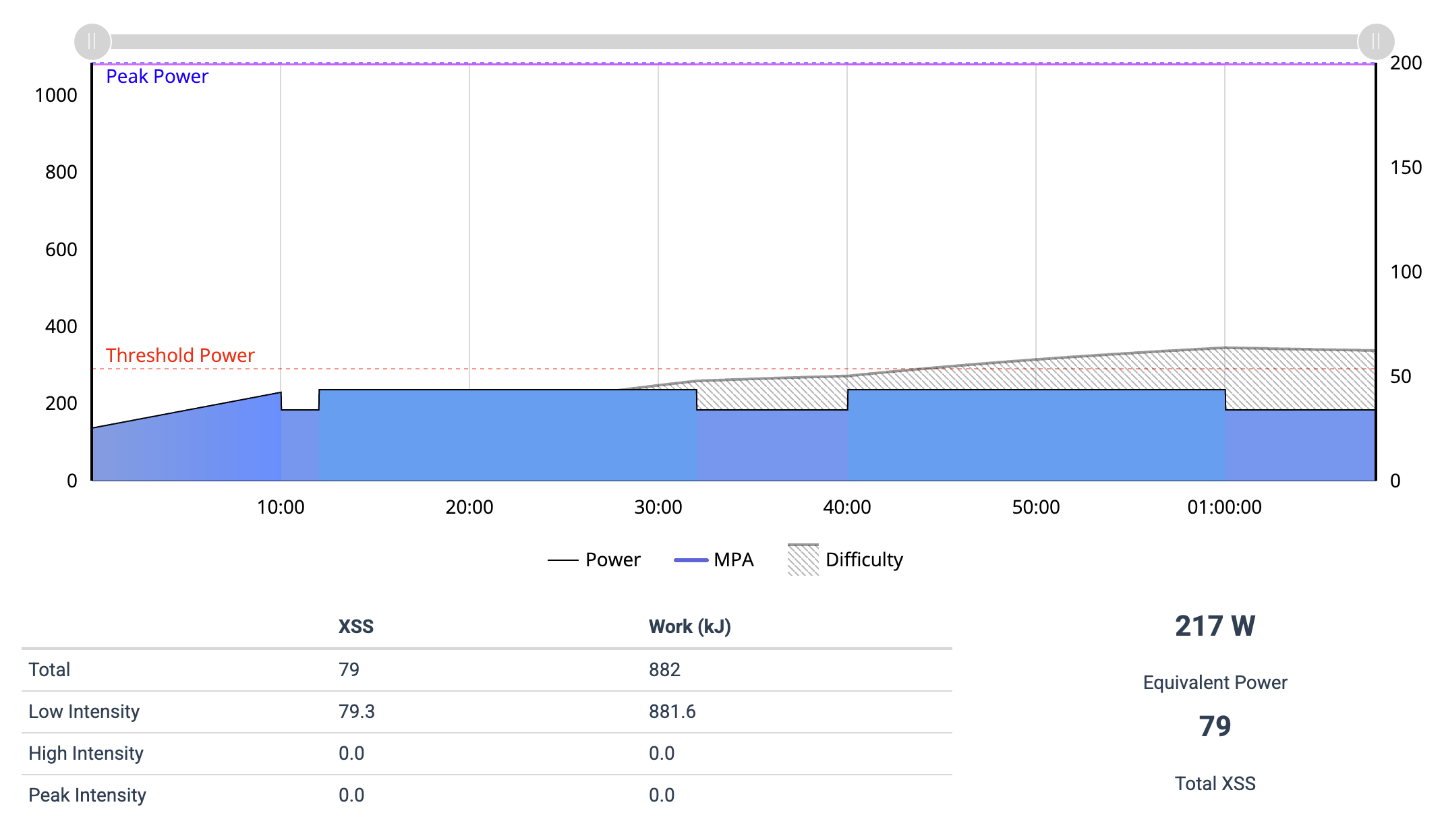
Here’s another example. Let’s compare the same workout at 82% TP:
What you’ll notice here is that the differences have a far less impact. Also, the differences in XLSS are negligible. The only difference is that XHSS gets some strain applied in 2.0 but not in 1.0.
This is more likely to reflect the total average intensity for a sweet spot focused training plan since you’re combining some sweet spot with some pure endurance. The effect on Low Training Load is negligible. Your High Training Load will be higher. Given the modest amount of XHSS, this is not likely to turn any significant number blue days into yellow days.
Now, you’re probably asking “What should I do then?”. The answer is “Unless you plan on doing the majority of your training at or near TP, you don’t need to worry.”
You have to remember, every other system out there uses TSS. TSS is a flawed metric and doesn’t separate anything into low, high or peak. It’s all the same strain. It works ok enough and if you have a sense of something being more high intensity than something else, you manually adjust your plan accordingly. This is how all these systems work. It’s a manual or “coaching” process to interpret the dose of high intensity you’ll get. It’s not in TSS. This is very blunt yet a lot of people rely on it (not sure why when there’s Xert!  )
)
So think about it a bit and you’ll get it. If you’re really concerned, pay a bit closer attention perhaps and adjust things yourself just like you would if you were doing something the old way. But for the moment, things work far better than any other method you’ll find.
 ?
?