(I believe this was the link you were looking to post? No such issues . Just a usual link…)
LTP is something we had seen in the data very early on and it had become so useful as a training metric that we decided to incorporate it into the system more directly. It provided a way to encapsulate a way to identify how well an athlete would withstand longer events: the higher the LTP, the better the athlete would do later in rides. It made sense to train at LTP since it would mean you’d do better at longer events, if these were part of your goals.
Physiologically, it made a lot of sense. LT1 is a value that aims to represent the onset of blood lactate accumulation which accumulates when glucose (i.e. glycogen) is used to generate power. This value is difficult to assign a value to, since the lactate levels increase continuously:
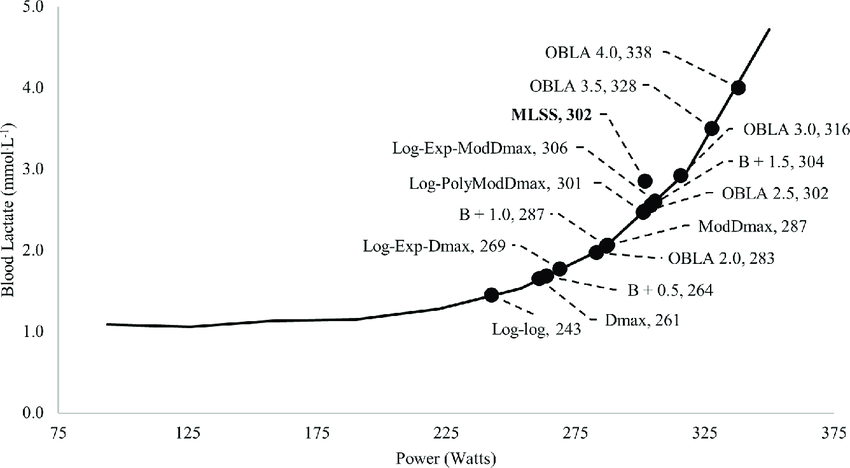
(From https://www.researchgate.net/figure/Representative-blood-lactate-curve-with-14-LTs-calculated-from-GXT-4-participant-9_fig1_326693764)
Hence physiologists have ongoing arguments on how to calculate it and what to do with it once you do.
If LT1 is low, it would mean you’d run out of glycogen sooner than another athlete with a higher LT1 riding under the same conditions, assuming it’s calculated the same way and represents the same for both.
We decided to use our method and call it LTP and use it as a indicator of long-term fitness and use it in training prescription. The feedback from this has been almost universally positive, some using it in place of their LT1 calculation. However, others that have not found it to coincide. We don’t make claims that it does, only that it is a useful metric to monitor and train with, much better than traditional zones. In practice, LTP has been extremely useful since it captures the difference between those that are gifted with lots of top end power (Sprinters, Pursuiters, Puncheurs) with those that are gifted with great endurance (Climbers, Time Triallists, Triathletes). In the end, if you’re an athlete with lots of high end power and you need to prepare for a longer event, if you follow traditional the Zone model based on %FTP, you’ll likely be training above this value and may find yourself frequently tired as a result. Similarly, if you’ve got a strong diesel engine and train by zones, you may not be putting sufficient strain to make your engine stronger if you follow the zone method. See Sweet Spot, Threshold and Polarized Training … By the Numbers – Xert to understand how the differences play out.
Interestingly, there are other patterns in the signature that we’ve discovered after looking deeper into the data. For example, this formula:
HIE*1000 / (PP - TP)
is roughly 30. Work it out for yourself and see where your number falls. What do you think this means?
The next iteration of the Xert model will likely see an improvement to how the lower intensity system works and will have a more continuous calculation, similar to how the body actually works.
Cheers.